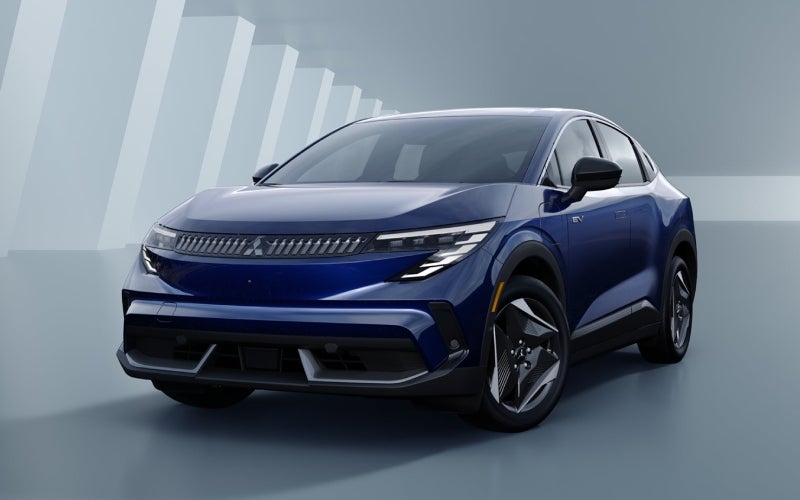

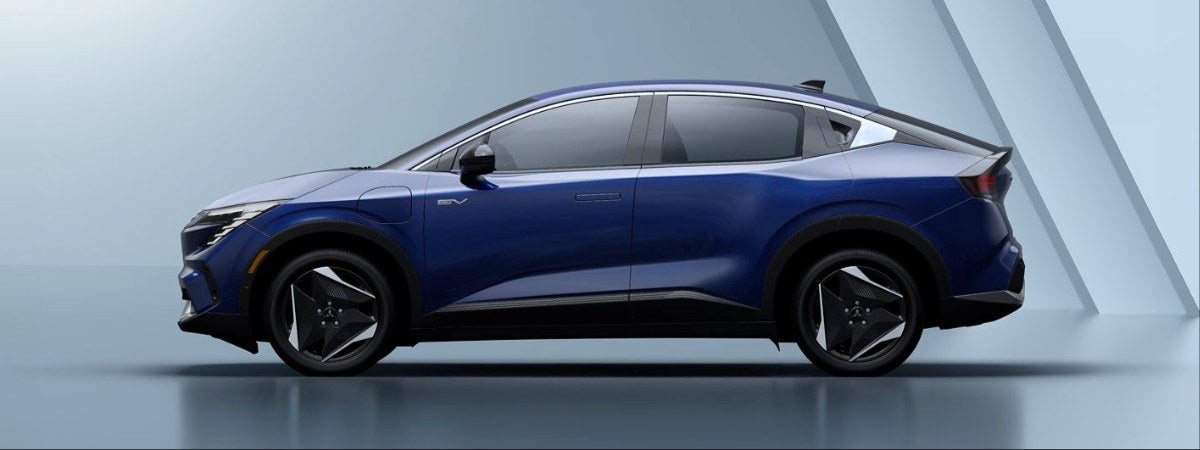
Peruzzi Mitsubishi - How Does the 2027 Mitsubishi Eclipse Sportback EV Charging Setup Fit Langhorne, PA Drivers? Electric vehicle shopping becomes much easier when the charging plan feels simple, realistic, and matched to your daily routine. For Langhorne, PA drivers considering the 2027 Mitsubishi Eclipse Sportback EV, the charging setup is one of the most important reasons this electric SUV deserves a closer look. Mitsubishi notes that the Eclipse Sportback EV supports Level 1 and Level 2 charging, along with Level 3 fast charging through the Tesla® Supercharger network. That combination gives shoppers flexibility at home, around town, and on longer routes across Bucks County, the Philadelphia area, and beyond. The appeal is not just that this EV can charge in multiple ways. It is that those charging options fit different parts of real life. A driver who has a garage or driveway may want the convenience of Level 2 home charging. Someone who drives shorter distances may use Level 1 charging more often than expected. A household that takes regional trips can benefit from DC fast-charging access, especially when planning stops along major travel corridors. The 2027 Mitsubishi Eclipse Sportback EV gives shoppers a way to think about EV ownership as a practical routine, not a complicated adjustment. Understanding the Three Charging Levels The 2027 Mitsubishi Eclipse Sportback EV offers access to three key types of charging. Level 1 charging uses a standard 120-volt outlet and is the simplest way to plug in, although it is typically the slowest. Level 2 charging uses 240-volt power and is often the preferred home-charging solution because it can add range more efficiently while the vehicle is parked for several hours. Level 3 charging, also known as DC fast charging, is designed for quicker stops away from home and can be especially helpful during longer drives. Provided details note that the Eclipse Sportback EV uses a split charge-port strategy. A NACS port on the right-front fender supports DC fast charging, while a J-1772 port on the left-front fender supports AC charging. The vehicle also includes a portable charging cord with pigtails for both 240-volt and 120-volt outlets. For shoppers who are new to EVs, that matters because it makes the vehicle feel more adaptable from the start. Why Tesla® Supercharger Network Access Matters Mitsubishi states that the Eclipse Sportback EV will offer Level 3 charging access through the Tesla® Supercharger network, the largest fast-charging network in North America. For in-market EV shoppers, network access is a major confidence factor. Range is important, but charging availability is what helps make an EV feel practical outside the normal weekday routine. Under ideal circumstances, provided content notes that DC fast charging can bring the battery from 10 to 80 percent in about 35 minutes. That does not mean every charging stop will be identical, because charging speed can depend on battery temperature, station capability, state of charge, and other conditions. Still, that type of capability is useful for drivers who want to make efficient stops while traveling. Entering a DC fast charger into the navigation as a destination can automatically precondition the battery pack for faster charging, and drivers can also tell the car to precondition if not using navigation. How Home Charging Can Fit Daily Life For many Langhorne, PA drivers, home charging is where EV ownership starts to feel especially convenient. If the vehicle can be plugged in overnight or during regular parked hours, daily driving may require far fewer public charging stops. Level 2 charging is the strongest option for many households because the onboard charger is capable of 7.2 kilowatts, with provided content noting that a 20 to 80 percent charge can take roughly 6.5 hours on 240-volt AC power. That kind of routine can be helpful for drivers commuting to nearby employment centers, making local school runs, heading to shopping areas, or connecting to regional roads for appointments and activities. Instead of stopping at a gas station, the charging routine can become part of parking at home. Shoppers should still consider electrical capacity, charger placement, parking location, and installation needs, but the basic idea is straightforward: plug in when the vehicle is parked, start the next drive with useful range available. Questions to Ask Before Choosing Your Charging Setup Before choosing any EV, it helps to map out your normal driving and charging needs. The 2027 Mitsubishi Eclipse Sportback EV has a projected 282-mile electric driving range, giving it strong day-to-day flexibility, but every household uses a vehicle differently. A driver with a predictable commute may need a different setup than a family that shares the vehicle for errands, sports, shopping, and weekend travel. Daily mileage: Estimate how far you drive on a normal weekday and a busier weekend day. Parking location: Consider whether the vehicle will be parked near a standard outlet or a potential 240-volt charging location. Public charging: Look at stations near work, shopping areas, and common travel routes. Trip planning: Think about how often you drive beyond the projected range and where fast charging would be useful. Household schedule: Decide when the vehicle can sit plugged in without interrupting daily needs. These questions do not need to be complicated. The goal is to identify whether your routine is best served by a Level 2 home charger, occasional Level 1 charging, public Level 2 charging, or a combination that includes DC fast charging for longer drives. Charging and the Driving Experience Work Together The Eclipse Sportback EV is not only about plugging in. Its electric powertrain also changes how the vehicle feels on the road. A 75-kWh battery pack, a 214-horsepower electric motor, and 261 pound-feet of torque helps create the quick, smooth response many EV shoppers enjoy during merging, passing, and city-to-suburb driving. Regenerative braking also plays a role in the EV experience. The vehicle offers five levels of regenerative braking, from B1 to B5, plus an e-Step button that increases regenerative effect. While the system does not provide full one-pedal operation to a complete stop, it can help drivers manage speed more smoothly once familiar with the settings. Around local roads with frequent lights, turns, and traffic changes, adjustable regeneration can make driving feel more controlled and efficient. Frequently Asked Questions: Can the 2027 Mitsubishi Eclipse Sportback EV be charged from a regular household outlet? Yes. Mitsubishi notes access to Level 1 charging, and provided details include a portable charging cord with a 120-volt pigtail. Level 1 charging is typically slower than other methods, but it can be useful for light daily driving, backup charging, or situations where a standard outlet is the most convenient option. Is Level 2 charging better for most home charging routines? For many EV owners, Level 2 charging is the preferred home solution because it uses 240-volt power and can add range more quickly than Level 1. Provided content notes that the Eclipse Sportback EV's onboard charger is capable of 7.2 kilowatts and can charge from 20 to 80 percent in roughly 6.5 hours under appropriate conditions. How does fast charging help on longer drives? Fast charging helps reduce downtime when traveling beyond your regular daily range. The Eclipse Sportback EV supports Level 3 charging through the Tesla® Supercharger network, and provided information notes that DC fast charging can charge from 10 to 80 percent in about 35 minutes under ideal circumstances. Should I plan charging stops through the vehicle navigation? Using navigation can be helpful because entering a DC fast charger as a destination can automatically precondition the battery pack for faster charging. Battery preconditioning helps the vehicle prepare for optimal charging performance, though actual charging time can still vary based on station and battery conditions. The 2027 Mitsubishi Eclipse Sportback EV charging setup is designed to make electric driving feel more flexible and approachable. For Langhorne, PA shoppers, the combination of projected 282-mile range, Level 1 and Level 2 capability, Level 3 access through the Tesla® Supercharger network, and smart battery preconditioning gives this EV a practical foundation for local driving and regional travel. The best next step is to think through where you park, how far you drive, and how often you travel beyond your regular routine. With that information, choosing the right charging approach becomes much clearer. As EV shopping continues to become more mainstream, the Eclipse Sportback EV gives Mitsubishi shoppers a well-rounded option with a sporty compact SUV shape, useful cabin technology, and charging flexibility that supports a wide range of lifestyles. Whether your priority is home convenience, fast-charging access, or simply understanding how an electric vehicle would fit your week, this Mitsubishi EV makes the conversation easier to start. Request more 2027 Mitsubishi Eclipse Sportback EV information
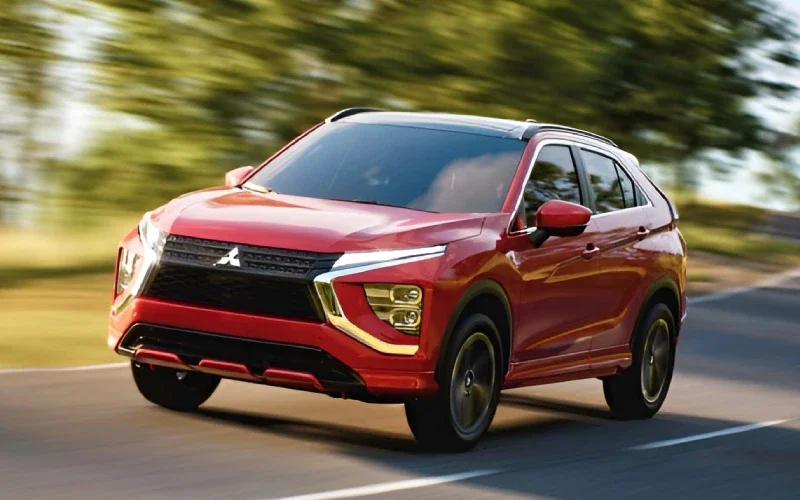
How Standard S-AWC in the 2026 Mitsubishi Eclipse Cross Supports Ewing, NJ Drivers
Peruzzi Mitsubishi - How Standard S-AWC in the 2026 Mitsubishi Eclipse Cross Supports Ewing, NJ Drivers For many Ewing, NJ drivers, a compact SUV has to feel comfortable in more than one setting. It may need to handle a weekday route along local roads near The College of New Jersey, a drive toward Trenton for work, a shopping trip across the river into Pennsylvania, or a longer highway run when the calendar fills up. That is where the 2026 Mitsubishi Eclipse Cross makes a strong case for itself, especially because Super-All Wheel Control (S-AWC) comes standard. Rather than treating all-wheel-drive capability as an extra consideration, Mitsubishi builds the Eclipse Cross around the idea that confident traction should be part of everyday driving. S-AWC is one of the most meaningful features on the 2026 Eclipse Cross because it supports the kind of control drivers appreciate in real-world conditions. The system is designed to help manage traction and stability as the vehicle responds to changing road surfaces, turns, acceleration, and driver inputs. For shoppers comparing compact SUVs, that matters because not every crossover includes this level of standard confidence. Some vehicles make all-wheel drive optional, while others focus more heavily on appearance than capability. The Eclipse Cross brings both together with distinctive styling, a composed ride, and the reassurance of S-AWC across the lineup. Why Standard S-AWC Matters in a Compact SUV Super-All Wheel Control (S-AWC) is not just a feature name on a window sticker. It is a core part of how the Eclipse Cross feels when you drive it. The system is designed to help distribute power and support vehicle stability, giving the driver a more planted feel during everyday maneuvers. That can be especially helpful when merging onto a highway, pulling away from a stop, navigating uneven pavement, or making quick adjustments in traffic. Around Ewing, where local roads can shift from neighborhood streets to busier corridors in a matter of minutes, that added confidence can make the Eclipse Cross feel easy to trust. Drivers often ask whether all-wheel drive is only useful during poor weather. The better answer is that traction support can be useful any time the road surface or driving situation changes. S-AWC can help add composure when pavement is broken, when a turn tightens unexpectedly, or when a road surface feels less consistent than expected. It does not replace careful driving, but it does add a helpful layer of control. In the 2026 Eclipse Cross, this capability works alongside a comfort-tuned suspension and light, accurate steering to create a relaxed compact SUV personality. How S-AWC Fits Ewing, NJ Driving Ewing has a mix of driving patterns that make a compact SUV with standard S-AWC appealing. Local drivers may spend part of the day on residential roads, part of the day near retail areas, and part of the day crossing into busier traffic around Trenton, Route 1, or I-295. The Eclipse Cross is sized for convenient maneuverability while still offering the elevated seating position and cargo flexibility many SUV shoppers want. It feels manageable when parking, comfortable on longer stretches, and stable when the pace of traffic changes quickly. For commuters, S-AWC can be reassuring because the same vehicle that feels easy on local streets can also feel steady at highway speeds. For families, it can add confidence when carrying passengers and cargo. For drivers who simply want a compact SUV that does not feel limited to fair conditions or flat, open roads, the Eclipse Cross delivers practical capability without making the vehicle feel oversized. This balance is a key reason the model appeals to shoppers who want everyday comfort first, with added traction confidence built in. Key Eclipse Cross Features That Work With S-AWC The 2026 Eclipse Cross is not defined by S-AWC alone. It pairs standard traction technology with safety, convenience, comfort, and design details that support daily use. Mitsubishi describes the model around the idea that more comes standard, and that approach is easy to see when reviewing the lineup. Even the ES S-AWC includes important confidence features such as Forward Collision Mitigation (FCM) with Pedestrian Detection, Lane Departure Warning (LDW), Active Stability Control (ASC), Hill Start Assist (HSA), LED Daytime Running Lights, LED Tail Lights, and 16-Inch Two-Tone Alloy Wheels. Confidence: Standard Super-All Wheel Control (S-AWC) supports handling and traction in varied driving situations. Safety awareness: Forward Collision Mitigation (FCM) with Pedestrian Detection and Lane Departure Warning (LDW) help support driver attention. Convenience: Available FAST-Key Entry System, Push Button Start, rear USB port, and Handsfree Power Tailgate simplify daily routines. Comfort: Available synthetic suede seating surfaces, leather appointed seating surfaces, heated steering wheel, and power adjustable front seating add refinement. Visibility: Available Blind Spot Warning (BSW) with Lane Change Assist (LCA), Rear Cross Traffic Alert (RCTA), and Multi-View Camera System support awareness. Choosing the Right Trim for S-AWC Confidence Because S-AWC is standard, every 2026 Eclipse Cross trim starts with the same basic traction advantage. The right trim depends more on which comfort, technology, and appearance features matter most. The ES S-AWC is a practical starting point for shoppers who want core Mitsubishi capability and driver-assistance features. The SE S-AWC adds a strong everyday convenience package with upgrades like FAST-Key Entry System, Push Button Start, Automatic Headlights, LED Headlights, Blind Spot Warning (BSW) with Lane Change Assist (LCA), Rear Cross Traffic Alert (RCTA), synthetic suede seating surfaces, and an 8-way power adjustable driver seat. The BLACK EDITION S-AWC is a smart choice for drivers who want a more distinctive look, thanks to features such as black door handle trim, black roof rails, hood badge, rear bumper step protector, and sport pedals. The SEL S-AWC and SEL Touring S-AWC move the Eclipse Cross into a more premium space with leather appointed seating surfaces, a heated steering wheel, paddle shifters, Multi-View Camera System, rear USB port, and an 8-way power adjustable passenger seat. For a shopper comparing trims, the key advantage is that capability does not have to be sacrificed while selecting a preferred level of comfort or style. Is S-AWC Good for Drivers Who Lease? Yes, S-AWC can make leasing the 2026 Eclipse Cross especially appealing because it gives you an SUV with useful standard capability from the start of the lease term. Leasing is often attractive for drivers who enjoy newer technology and a shorter ownership cycle. Since the Eclipse Cross includes S-AWC across the lineup, you do not need to focus only on higher trims to access that traction confidence. You can choose the trim that fits your preferred features and still get the same standard all-wheel control foundation. Leasing can also make sense if your driving routine is predictable. If most miles come from commuting, errands, campus visits, appointments, and weekend travel, a lease may fit well. You can enjoy current Mitsubishi design, safety systems, and connectivity while keeping the door open for a future upgrade. For many Ewing-area drivers, that flexibility is a major advantage, especially as technology and convenience features continue to evolve. Is S-AWC Good for Long-Term Owners? S-AWC also supports the case for financing and keeping the Eclipse Cross long term. Ownership can be a better fit if you drive higher mileage, plan to keep your SUV for many years, or want the freedom to customize with Mitsubishi accessories. The Eclipse Cross offers everyday usefulness that can continue serving a household as routines change. Its flexible cargo area, comfortable seating, and compact footprint make it practical for everything from commuting to family errands. Long-term owners may also appreciate Mitsubishi Confidence. The 2026 Eclipse Cross is backed by standard 2-Year/30,000-Mile Limited Maintenance, an Industry-Leading 10-Year/100,000-Mile Powertrain Limited Warranty, and 5 years of 24-Hour Roadside Assistance. For a buyer who wants to own an SUV beyond the first few years, warranty coverage can add meaningful peace of mind. Combined with standard S-AWC, the Eclipse Cross becomes a compact SUV designed to stay useful well beyond the initial excitement of purchase. Frequently Asked Questions: Is Super-All Wheel Control (S-AWC) standard on the 2026 Mitsubishi Eclipse Cross? Yes. The 2026 Mitsubishi Eclipse Cross includes standard Super-All Wheel Control (S-AWC), giving every trim an added layer of traction and stability support. Does S-AWC help only in bad weather? No. While S-AWC can be helpful when roads are less predictable, it also supports everyday handling during turns, starts, and changing road surfaces. Which Eclipse Cross trim is best for technology? The SE S-AWC and higher trims add more convenience and awareness features, while SEL S-AWC and SEL Touring S-AWC bring premium touches like Multi-View Camera System and leather appointed seating surfaces. Is the Eclipse Cross easy to use as a daily commuter SUV? Yes. Its compact size, comfortable ride, standard S-AWC, and available driver-assistance features make it well suited for commuting and daily errands. For Ewing, NJ shoppers, the 2026 Mitsubishi Eclipse Cross offers a practical answer to a common compact SUV question: how much confidence should come standard? With S-AWC included across the lineup, the Eclipse Cross gives drivers capability without forcing a complicated feature decision. Add its bold styling, quiet cabin character, safety technology, and available premium conveniences, and it becomes a strong fit for drivers who want an SUV that feels composed, useful, and ready for a wide range of local driving needs. Request more 2026 Mitsubishi Eclipse Cross information