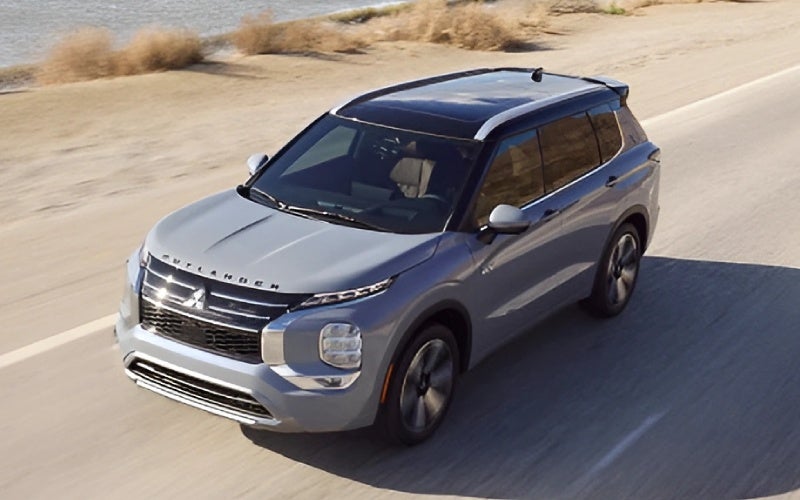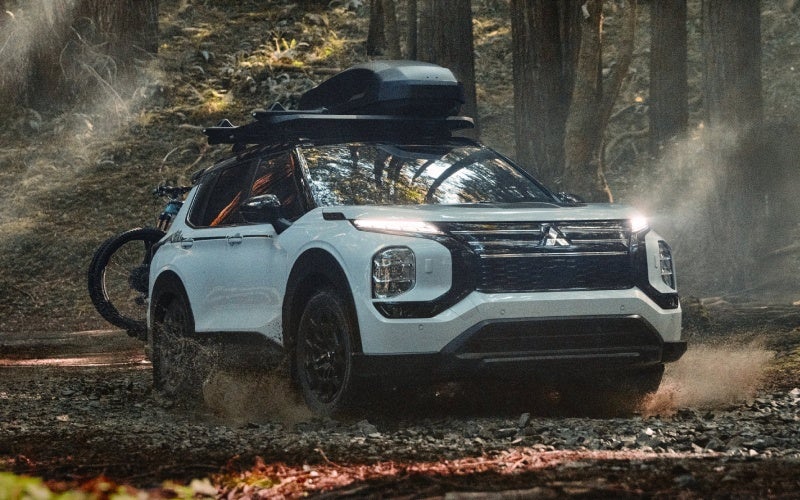

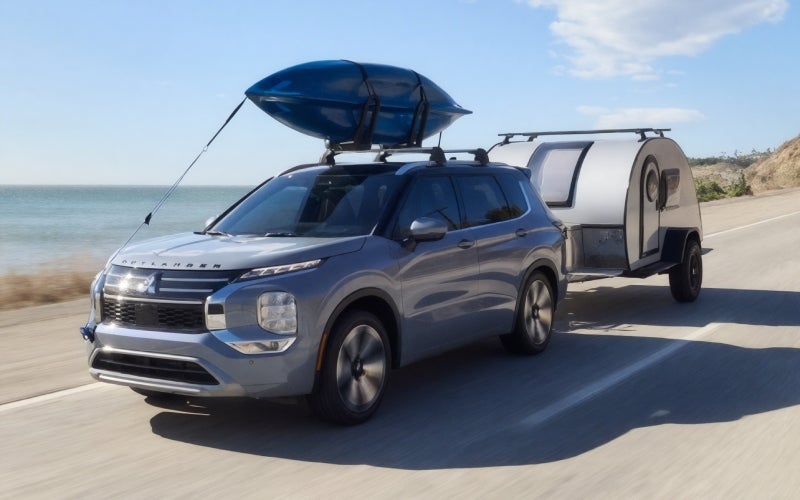
Peruzzi Mitsubishi - Does the 2026 Mitsubishi Outlander offer S-AWC for Trenton, NJ drivers? Drivers around Trenton, NJ often need an SUV that can feel composed across a wide mix of roads, from neighborhood streets and commuter routes to bridges, parking decks, and busy retail corridors. The 2026 Mitsubishi Outlander answers that need with available S-AWC, Mitsubishi’s Super All-Wheel Control system, which is designed to support confident handling and traction when road conditions or driving surfaces change. The Outlander is already appealing because it combines 7 Passenger Seating, modern technology, strong standard safety content, and a refined cabin. Available S-AWC adds another layer of confidence for shoppers who want an SUV that feels ready for more than a simple point-A-to-point-B routine. For drivers traveling between Trenton, Fairless Hills, Levittown, and the greater Philadelphia region, that added control can make the Outlander feel better suited to real daily driving. What is S-AWC on the 2026 Mitsubishi Outlander? S-AWC stands for Super All-Wheel Control. On the 2026 Mitsubishi Outlander, available S-AWC helps manage traction and vehicle control by supporting grip and stability as driving conditions change. It is not simply about sending power to additional wheels. Mitsubishi engineers the system to help the vehicle feel more planted, predictable, and responsive during everyday driving. For shoppers comparing SUVs, this matters because all-wheel drive systems can vary widely. Some systems are mainly designed to react after wheel slip occurs. S-AWC is part of a broader Mitsubishi approach to confidence, helping the Outlander deliver a balanced feel in situations where traction, cornering stability, and driver assurance all matter. Why S-AWC makes sense around Trenton, NJ Trenton-area driving can involve quick transitions. A driver may leave a residential street, merge onto a faster road, navigate bridge traffic, enter a tight parking area, and then turn onto an uneven side street within the same drive. Available S-AWC gives the 2026 Outlander an adaptable character that can be especially useful when roads are crowded, surfaces vary, or the route includes a mix of urban and suburban conditions. Another advantage is the Outlander’s Drive Mode Selector. S-AWC models include modes such as Tarmac, Gravel, Snow, Normal, Eco, and Mud. These settings allow the driver to select a response that better matches the situation. Normal is a natural fit for routine driving, Eco supports efficiency-minded operation, Tarmac is designed for responsive paved-road driving, and Gravel, Snow, and Mud are there when conditions call for added traction awareness. Tarmac: Helps support a responsive feel on paved roads when confident handling is a priority. Normal: Provides a balanced setting for typical daily driving and commuting. Eco: Adjusts vehicle response for drivers who want efficiency-focused operation. Gravel: Helps the Outlander adapt to loose or uneven surfaces. Snow: Supports traction-focused driving when road conditions are slick or reduced-grip. Mud: Adds another setting for S-AWC models when soft or challenging surfaces are encountered. These modes do not replace attentive driving, but the ability to tailor vehicle response is a practical benefit. Rather than offering a one-size-fits-all setup, the Outlander gives the driver more control over how the SUV behaves. How S-AWC fits with the Outlander powertrain The 2026 Mitsubishi Outlander uses a 1.5L MIVEC DOHC Turbo 4-cylinder Direct-Injection 48V-BSG engine. Mitsubishi lists the engine at 174 horsepower and 206 lb-ft of torque, and it works with a Continuously Variable Transmission (CVT). This combination is designed for smooth response in everyday use, which is important for a three-row SUV that may carry passengers, cargo, or both. When paired with available S-AWC, the Outlander’s powertrain feels well matched to the SUV’s mission. The turbocharged torque helps with everyday acceleration, while the CVT keeps the drive smooth. S-AWC then contributes extra confidence by helping the vehicle manage traction and composure. For Trenton-area shoppers, that combination can be more meaningful than focusing on power alone because a family SUV needs to feel secure, predictable, and easy to live with. S-AWC and family confidence Many Outlander shoppers are looking for a vehicle that can support family life. The standard 7 Passenger Seating layout makes the SUV useful for school routines, relatives, friends, and changing passenger needs. With the second row’s 40:20:40 split type seat with folding function, the cabin can be reconfigured for people, cargo, or a combination of both. Available S-AWC complements that family-friendly layout because confidence matters even more when passengers are onboard. Whether carrying children, commuting with coworkers, or taking a longer drive with luggage, a stable and composed SUV can make the trip feel calmer. The Outlander also supports that confidence with standard safety technologies including Blind Spot Warning (BSW) w/ Lane Change Assist (LCA), Forward Collision Mitigation (FCM) with Pedestrian Detection, Rear Automatic Emergency Braking (Rear AEB), Rear Cross Traffic Alert (RCTA), Rear Parking Sensors, Driver Attention Alert (DAA), and 11 airbags. On select trims and packages, the Outlander can also offer technologies such as a Multi-View Camera System and MI-PILOT Assist w/ Navi-link Adaptive Cruise Control (ACC) with Stop & Go Lane Keep Assist (LKA), Lane Departure Prevention (LDP), and Traffic Sign Recognition (TSR). These systems can be especially helpful in traffic-heavy areas where drivers frequently deal with lane changes, stop-and-go movement, and tight parking situations. Should every shopper choose S-AWC? Whether S-AWC is the right choice depends on how and where the SUV will be driven. A shopper who primarily drives short local routes may find a 2WD Outlander meets daily needs. However, shoppers who value added traction capability, travel frequently across mixed road conditions, or simply prefer the confidence of an advanced all-wheel control system may find available S-AWC well worth considering. The best way to decide is to test drive both configurations if possible. Pay attention to steering feel, acceleration, turning response, and how the Outlander feels during low-speed maneuvers. It is also helpful to review the Drive Mode Selector and ask how each mode changes the vehicle’s behavior. A knowledgeable product specialist can explain the system in practical terms, which is often more useful than reading a spec sheet alone. What else should shoppers compare? S-AWC is important, but it should be evaluated alongside the rest of the vehicle. The 2026 Outlander includes a standard 12.3" Smartphone-link Display Audio with Navigation, Wireless Apple CarPlay®, Wireless Google Android Auto™, Bluetooth® Wireless Technology, and Dynamic Sound Yamaha® Premium. Available Dynamic Sound Yamaha® Ultimate upgrades the listening experience with a 12-speaker configuration, dual amplifiers, and acoustic tuning inspired by Yamaha® expertise. Interior comfort is another key area. Depending on trim and package, shoppers can find features such as heated front seats, a heated steering wheel, synthetic leather suede seating surfaces, a smartphone wireless charger, rear USB-C ports, a power panoramic sunroof, and a 12.3" Full Digital Driver Display. The right Outlander is not just about drivetrain. It is about building the SUV around the way the driver and passengers will actually use it. Frequently Asked Questions: Is S-AWC standard on every 2026 Mitsubishi Outlander? No. The 2026 Mitsubishi Outlander is offered with 2WD or available S-AWC, depending on trim and configuration. Shoppers who want Super All-Wheel Control should confirm the drivetrain on the exact vehicle being considered. Does S-AWC help only in snow? No. While Snow mode is included on S-AWC models, the system is useful beyond winter-style conditions. Drive modes such as Tarmac, Gravel, Normal, Eco, and Mud help the Outlander adapt to a broader range of surfaces and driving preferences. Can I feel the difference during a test drive? Many shoppers notice differences in confidence, traction feel, and composure, especially when comparing turning response or driving on varied road surfaces. A test drive is the best way to decide whether S-AWC fits personal expectations. Does S-AWC change the Outlander’s seating or cargo flexibility? No. The Outlander still offers 7 Passenger Seating and a flexible three-row cabin. S-AWC affects drivetrain capability, while the interior remains focused on passenger and cargo versatility. For Trenton, NJ shoppers, the 2026 Mitsubishi Outlander with available S-AWC is a smart option to compare because it adds meaningful capability without taking away from the SUV’s comfort, technology, or family flexibility. It is a practical choice for drivers who want a three-row SUV that feels confident on more than one type of road. Request more 2026 Mitsubishi Outlander information
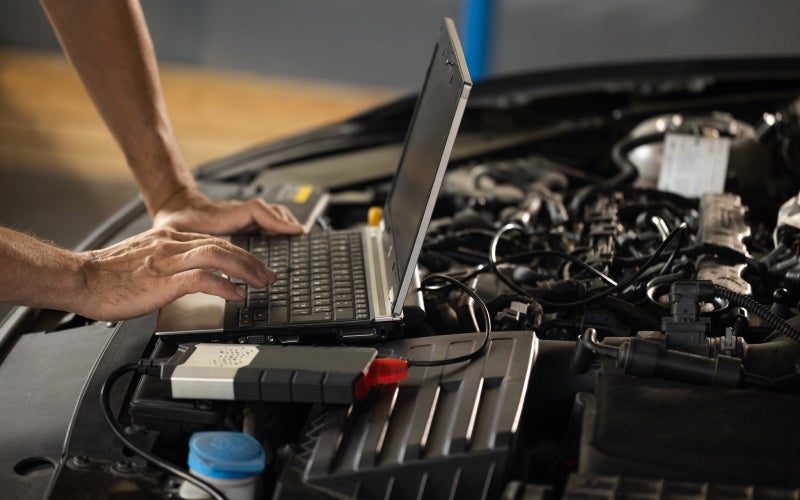
What a Mitsubishi Check Engine Light Diagnostic Means for Levittown, PA Drivers
Peruzzi Mitsubishi - What a Mitsubishi Check Engine Light Diagnostic Means for Levittown, PA Drivers Seeing a check engine light come on can interrupt an otherwise normal day, especially when your vehicle still seems to drive normally. For many Levittown, PA drivers, the first question is simple: does this need attention right away, or can it wait until the next maintenance visit? The best answer depends on the light behavior, vehicle symptoms, and what the onboard diagnostic system has detected. A steady light may point to an emissions, fuel, ignition, sensor, or airflow concern. A flashing light can signal a more serious condition, often related to misfiring, that should be checked promptly. Because modern Mitsubishi vehicles use connected electronic systems, a diagnostic scan is only the beginning. A code provides direction, but careful testing confirms the actual cause. Why Local Driving Can Reveal Engine Performance Concerns Driving around Levittown often includes a mix of residential roads, stop-and-go traffic, short trips, and faster stretches near Route 13, I-295, and nearby bridges into New Jersey. That variety can make engine issues show up in different ways. A vehicle may idle smoothly at home but hesitate when merging. Another may feel fine on a short trip but use more fuel than expected during a week of commuting. Local driving patterns also matter because repeated short trips may not always allow the engine to reach full operating rhythm for long periods. Over time, worn spark components, restricted airflow, aging filters, weak batteries, or sensor concerns can become more noticeable during acceleration, cold starts, or extended traffic delays. What Happens During a Professional Diagnostic Visit A proper diagnostic appointment is more detailed than plugging in a scanner and replacing the first part mentioned by a code. Our technicians start by gathering information about the warning light, recent driving behavior, mileage, maintenance history, and any symptoms such as rough idle, hard starting, vibration, reduced power, unusual smells, or lower fuel economy. Diagnostic equipment is then used to retrieve stored codes, pending codes, and freeze-frame data. That information can show what was happening when the fault was recorded, such as engine temperature, speed, load, or sensor readings. From there, our team can inspect related systems and determine whether the concern is electrical, mechanical, maintenance-related, or connected to another vehicle system. Steady warning light: Schedule service soon so the cause can be identified before additional symptoms appear. Flashing warning light: Reduce driving and arrange service quickly because the concern may be more serious. Rough idle or shaking: Ignition, fuel delivery, air intake, or engine management concerns may need testing. Slow starts: Battery, starter, alternator, or charging system performance may be part of the issue. Lower fuel economy: A sensor, air filter, tune-up item, or drivability concern may be affecting efficiency. One reason professional diagnosis matters is that the same code can have more than one cause. For example, a sensor code might indicate a failed sensor, but it might also point to a wiring issue, an air leak, a fluid-related concern, or a condition affecting readings elsewhere in the system. Replacing parts without confirmation can waste time and create frustration. A trained service team looks at the whole picture: the code, the vehicle’s behavior, inspection results, and Mitsubishi service information. This approach is especially valuable for models such as Outlander, Outlander Sport, Eclipse Cross, and Outlander Plug-in Hybrid, which combine advanced electronics with model-specific engineering. How Tune-Up Service Connects to Check Engine Light Concerns Sometimes a check engine light leads to a repair, and sometimes it reveals that maintenance is overdue. Tune-up service can include synthetic motor oil replacement, oil filter replacement, air filter service, fluid checks, belt and hose inspection, and evaluation of ignition and charging system performance. These services support clean combustion, consistent starting, smooth idle quality, and reliable operation. If your Mitsubishi feels less responsive than it used to, struggles at start-up, or seems to need more fuel for the same routine, a tune-up evaluation can help restore confidence. Maintenance does not replace diagnostics, but both services often work together when a vehicle shows performance changes. Parts quality also plays a role in long-term repair results. Our parts department can help source OEM Mitsubishi components designed for proper fit, function, and compatibility. For non-stock parts, quick ordering may make availability possible as soon as the next day, depending on the item. Knowledgeable parts support helps technicians complete work accurately and helps owners feel confident that replacement components match vehicle requirements. While aftermarket parts can vary widely, OEM parts are engineered with Mitsubishi specifications in mind, which is important for sensors, filters, ignition components, and other parts connected to engine performance. When to Schedule Service Instead of Waiting It is wise to schedule a diagnostic visit when the check engine light appears, even if the vehicle still feels normal. Early testing can catch small issues before drivability changes become more obvious. Service should be scheduled sooner if the vehicle runs rough, stalls, hesitates, smells unusual, struggles to start, or displays multiple warning lights. If the light is flashing, avoid unnecessary driving and seek assistance as soon as possible. New Mitsubishi owners may also have access to roadside assistance coverage, which can include help for jump starts, towing, emergency fuel or fluid delivery, lockout assistance, and other covered situations. If your vehicle is not safe to drive, using available roadside support may be the better choice. Frequently Asked Questions: Can an auto parts store scan replace a diagnostic appointment? A basic scan can read a code, but it usually does not confirm the cause. A professional diagnostic visit includes testing, inspection, data review, and interpretation by trained technicians. Should I reset the check engine light to see if it comes back? Resetting the light without finding the cause can erase useful diagnostic information. It is better to have the concern checked before clearing codes. Can low battery voltage trigger warning lights? Yes. Battery, starter, and alternator concerns can affect vehicle electronics. That is why charging system testing may be part of a complete diagnostic process. If you drive in or near Levittown, PA and your Mitsubishi has a check engine light, rough idle, slow start, or performance change, our service team is ready to help. We offer online scheduling, early drop off, late pick up, and certified service knowledge for routine maintenance and more complex repair needs. Schedule your diagnostic appointment today and get clear answers from a team focused on keeping your vehicle dependable mile after mile. Request more information