

Tire Rotation vs. Wheel Alignment Service near Langhorne, PA
Tire Rotation vs. Wheel Alignment Service near Langhorne, PA
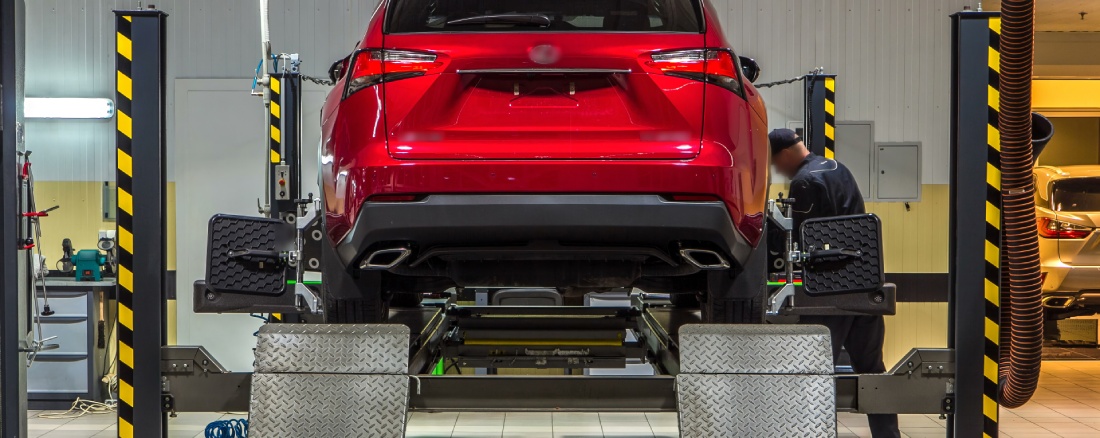
Tire rotation and wheel alignment are often mentioned together, but each service solves a different problem. A tire rotation moves your tires from one position on the vehicle to another, helping front, rear, left, and right tires wear more evenly over time. A wheel alignment adjusts suspension angles so your tires meet the road correctly and your vehicle tracks straight. For drivers near Langhorne, PA, this distinction matters because daily travel on Route 1, I-295, Lincoln Highway, and local neighborhood roads can expose tires and suspension components to repeated turns, uneven pavement, curbs, and potholes. At Peruzzi Mitsubishi, our service department in Fairless Hills supports routine tire service, preventative maintenance, steering and suspension checks, and broader automotive repair using Mitsubishi-certified technicians. Rotation is primarily about tire life and balanced wear, while alignment is about steering geometry, vehicle control, and preventing irregular tire wear caused by incorrect angles. Both services help protect fuel efficiency, ride comfort, braking performance, and long-term vehicle value. If your Mitsubishi Outlander, Eclipse Cross, Outlander Sport, or another make or model feels different on the road, the key is knowing whether the issue points to tire position, tread condition, or suspension alignment.
What Tire Rotation Does and How Often It Is Needed
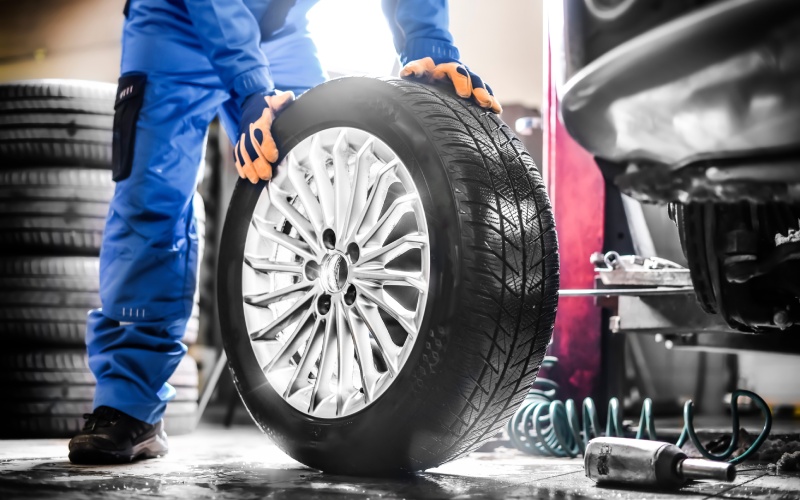
- Main purpose: Tire rotation evens out tread wear by moving tires to different wheel positions based on drivetrain, tire type, and manufacturer guidance.
- Typical frequency: Many vehicles benefit from rotation about every 5,000 to 7,500 miles, often during an oil change or routine maintenance visit.
- Why it matters: Front tires often wear faster because steering, braking, and vehicle weight place extra demand on front tread blocks.
- What technicians check: Tire pressure, tread depth, sidewall condition, punctures, vibration concerns, and wear patterns can be reviewed during rotation.
A tire rotation does not change suspension angles, and it will not correct a vehicle that pulls because of alignment problems. Instead, rotation helps each tire share workload more evenly. This can extend tire life, support smoother handling, and reduce the chance of replacing two tires much earlier than the other two. Rotation frequency can vary based on driving style, tire design, road conditions, and whether your vehicle uses front-wheel drive, all-wheel drive, or another setup. Local drivers who make frequent short trips around Oxford Valley, Fairless Hills, Levittown, and surrounding Bucks County roads may still accumulate uneven wear from repeated turning, braking, and parking-lot maneuvering. If a technician sees tread depth around 6/32 inch or more, replacement may not be needed. Around 4/32 to 5/32 inch, replacement should be considered. At 3/32 inch or less, replacement is strongly recommended, with 2/32 inch considered illegal in most states.
What Wheel Alignment Does and How Often It Is Needed
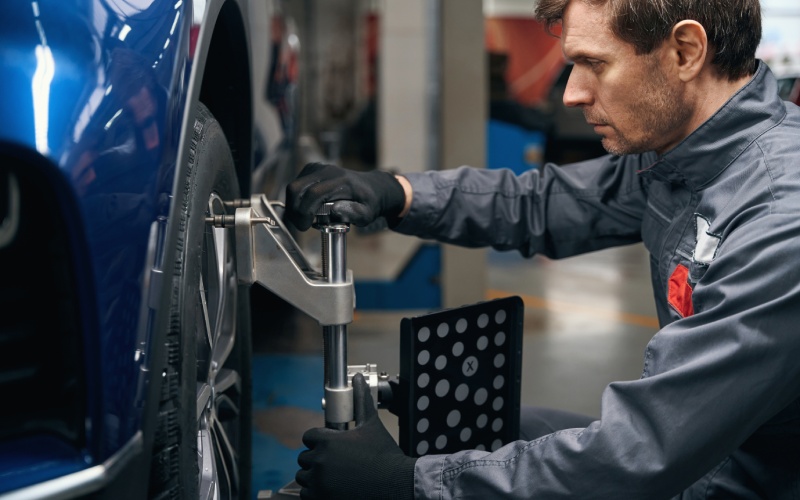
Wheel alignment focuses on the direction and angle of the wheels in relation to the vehicle, suspension, and road surface. During an alignment, a technician measures and adjusts key angles such as camber, caster, and toe when adjustment is available. Camber describes how much the tire leans inward or outward when viewed from the front. Toe describes whether tires point slightly inward or outward when viewed from above. Caster relates to steering stability and return-to-center feel. When these angles fall outside specification, even a good set of tires can wear unevenly and your vehicle may feel less predictable. Alignment is commonly checked once a year, whenever new tires are installed, after suspension or steering repairs, or any time your vehicle hits a pothole, curb, or road debris hard enough to change steering feel. At Peruzzi Mitsubishi, technicians are trained to inspect Mitsubishi vehicles with attention to factory specifications, and our service center can also work on all makes and models. Alignment is not a routine tire-position swap. It is a precision service that protects tire contact, steering response, braking stability, and overall drivability. If your steering wheel is off-center or your vehicle drifts, an alignment inspection is usually the right next step.
Symptoms That Point to Rotation or Alignment
- Likely tire rotation issue: Uneven tread depth between front and rear tires, mild vibration, or faster wear on one axle can suggest overdue rotation.
- Likely alignment issue: Vehicle pulling left or right, crooked steering wheel, feathered tread, or rapid edge wear can point to incorrect alignment angles.
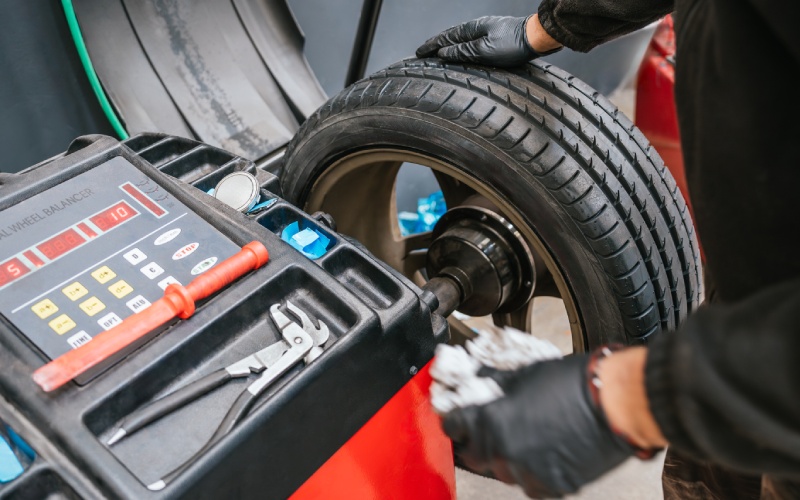
- Possible tire balance issue: Steering wheel vibration at certain speeds may involve wheel balance rather than rotation or alignment alone.
- Possible tire replacement need: Tread at 4/32 to 5/32 inch deserves attention, while 3/32 inch or less means replacement should be planned promptly.
- Professional inspection clue: A technician can compare tread patterns, pressure readings, suspension condition, and road-test behavior to identify the correct service.
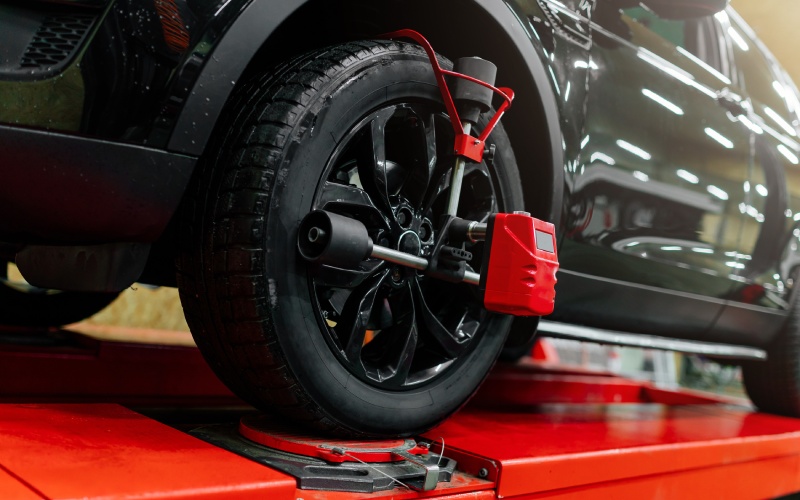
Symptoms sometimes overlap, so the safest answer is not always obvious from the driver seat. A thumping noise could come from uneven tire wear, a separated tire, or another concern. A pull could be alignment-related, but low tire pressure or a damaged tire can create a similar feeling. Cupped tread may suggest suspension wear, while shoulder wear can come from underinflation, aggressive cornering, or alignment trouble. This is why a complete tire and steering inspection matters. A qualified service advisor can help decide whether rotation, alignment, balancing, tire replacement, or suspension repair is the best solution. Mitsubishi tire service also includes access to major tire brands such as Dunlop, Nexen, Yokohama, and more, along with expert installation from factory-trained technicians.
FAQ
Is tire rotation the same as wheel alignment?
No. Tire rotation changes tire positions on the vehicle to promote even wear. Wheel alignment adjusts suspension angles so the tires contact the road at the correct angle and the vehicle tracks properly.
How often should I rotate my tires?
A common guideline is every 5,000 to 7,500 miles, although your owner’s manual, tire type, driving habits, and service history should guide the final schedule. Many drivers pair rotation with oil changes for convenience.
How often should I get an alignment?
Many vehicles should have alignment checked about once per year, when new tires are installed, after suspension work, or after a hard impact with a curb, pothole, or road hazard.
Can bad alignment ruin new tires?
Yes. If alignment angles are out of specification, new tires can develop edge wear, feathering, or rapid uneven wear. Checking alignment when installing new tires can help protect your investment.
What if my vehicle shakes at highway speed?
Shaking at a specific speed often points to tire balance, wheel damage, tire condition, or uneven wear. Rotation may help identify the source, but balancing or further inspection may be needed.
Should alignment be done before or after rotation?
A technician can advise based on tire condition. If tires are in good shape, rotation and alignment can often be handled during the same visit. If tread is severely worn, tire replacement may come first.
Schedule Tire Rotation or Alignment Service Today
Keeping tires properly rotated and wheels correctly aligned is one of the simplest ways to improve everyday confidence behind the wheel. Rotation helps each tire wear more evenly, while alignment helps your vehicle steer straight, protect tread, and maintain stable road contact. If you notice pulling, a crooked steering wheel, vibration, uneven tread, or rapid edge wear, do not wait for the concern to become more expensive. Our service and parts facility is located at 49 Spencer Avenue in Fairless Hills, Pennsylvania, with trained technicians ready to inspect tires, suspension components, steering behavior, tread depth, and overall vehicle condition. We offer convenient service scheduling, knowledgeable parts support, and maintenance for Mitsubishi vehicles as well as other makes and models. Drivers can also ask about tire options, OEM parts availability, and routine maintenance that fits current mileage. Schedule service with Peruzzi Mitsubishi near Langhorne, PA, and let our team help determine whether your vehicle needs tire rotation, wheel alignment, tire balancing, replacement tires, or a deeper inspection. With the right service at the right interval, your vehicle can feel smoother, track straighter, and make better use of every mile ahead.

*All advertised prices do not include destination, dealer installed options, dealer addendum, government fees and taxes, any finance charges, any dealer document preparation charge. Available Discounted Price does not include applicable tax, title, license, processing and/or documentation fees. Our Mitsubishi prices may reflect financing through specific banks. Prices may include Mitsubishi loyalty, trade, military rebate and Mitsubishi VIP pricing. See Dealer for Details.
All manufacturer rebates and incentives such as; College Grad, Customer Cash, Holiday cash, and Customer Appreciation are included in internet sale price. Customer must qualify for all rebates used. Peruzzi makes no representations, expressed or implied, to any actual or prospective purchaser or owner of this vehicle as to the existence, ownership, accuracy, description or condition of the listed vehicle's equipment, accessories, price, specials or any warranties. Any and all differences must be addressed prior to the sale of this vehicle. 120% of trade value based on purchasing vehicle at MSRP and trade being in excellent condition, damage and mileage deductions will apply.
Dealer is not responsible for pricing errors. Peruzzi makes no representations, expressed or implied, to any actual or prospective purchaser or owner of this vehicle as to the existence, ownership, accuracy, description or condition of the listed vehicle's equipment, accessories, price, specials or any warranties. Any and all differences must be addressed prior to the sale of this vehicle.