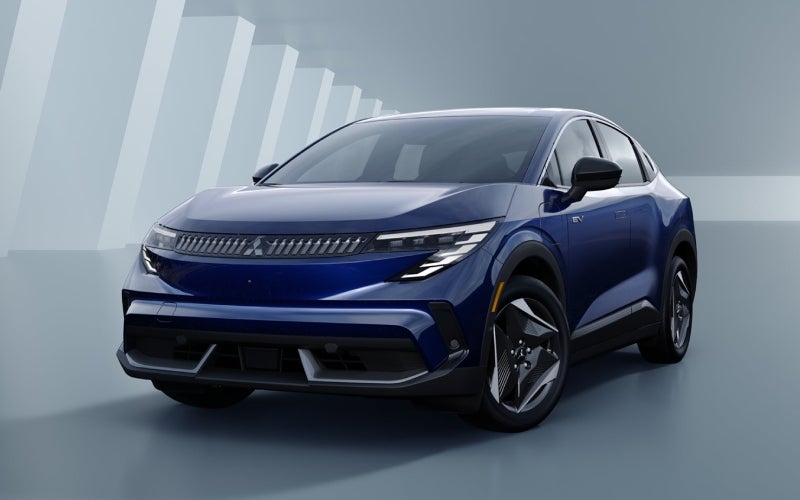

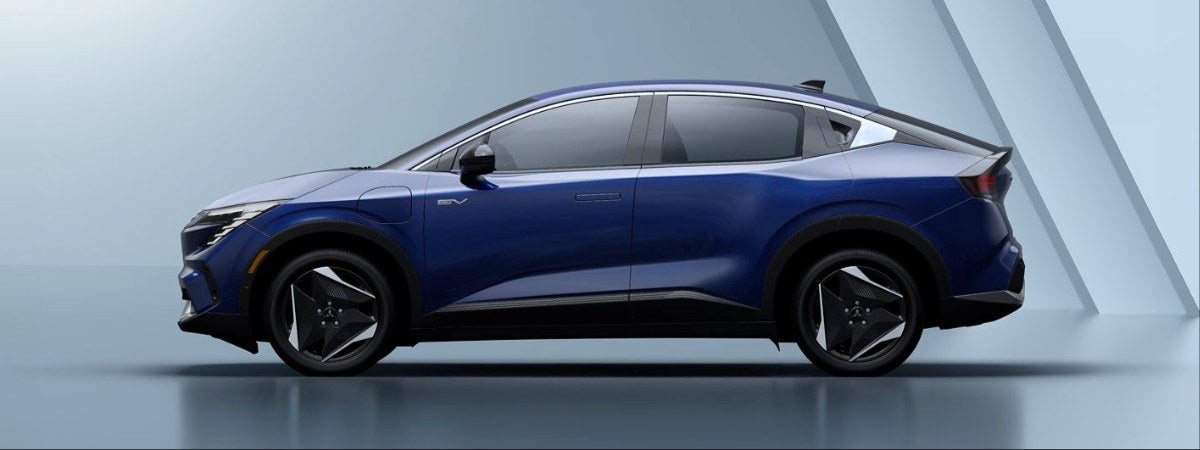

Peruzzi Mitsubishi - How Does the 2027 Mitsubishi Eclipse Sportback EV Charging Setup Fit Langhorne, PA Drivers?
Electric vehicle shopping becomes much easier when the charging plan feels simple, realistic, and matched to your daily routine. For Langhorne, PA drivers considering the 2027 Mitsubishi Eclipse Sportback EV, the charging setup is one of the most important reasons this electric SUV deserves a closer look. Mitsubishi notes that the Eclipse Sportback EV supports Level 1 and Level 2 charging, along with Level 3 fast charging through the Tesla® Supercharger network. That combination gives shoppers flexibility at home, around town, and on longer routes across Bucks County, the Philadelphia area, and beyond.
The appeal is not just that this EV can charge in multiple ways. It is that those charging options fit different parts of real life. A driver who has a garage or driveway may want the convenience of Level 2 home charging. Someone who drives shorter distances may use Level 1 charging more often than expected. A household that takes regional trips can benefit from DC fast-charging access, especially when planning stops along major travel corridors. The 2027 Mitsubishi Eclipse Sportback EV gives shoppers a way to think about EV ownership as a practical routine, not a complicated adjustment.
Understanding the Three Charging Levels
The 2027 Mitsubishi Eclipse Sportback EV offers access to three key types of charging. Level 1 charging uses a standard 120-volt outlet and is the simplest way to plug in, although it is typically the slowest. Level 2 charging uses 240-volt power and is often the preferred home-charging solution because it can add range more efficiently while the vehicle is parked for several hours. Level 3 charging, also known as DC fast charging, is designed for quicker stops away from home and can be especially helpful during longer drives.
Provided details note that the Eclipse Sportback EV uses a split charge-port strategy. A NACS port on the right-front fender supports DC fast charging, while a J-1772 port on the left-front fender supports AC charging. The vehicle also includes a portable charging cord with pigtails for both 240-volt and 120-volt outlets. For shoppers who are new to EVs, that matters because it makes the vehicle feel more adaptable from the start.
Why Tesla® Supercharger Network Access Matters
Mitsubishi states that the Eclipse Sportback EV will offer Level 3 charging access through the Tesla® Supercharger network, the largest fast-charging network in North America. For in-market EV shoppers, network access is a major confidence factor. Range is important, but charging availability is what helps make an EV feel practical outside the normal weekday routine.
Under ideal circumstances, provided content notes that DC fast charging can bring the battery from 10 to 80 percent in about 35 minutes. That does not mean every charging stop will be identical, because charging speed can depend on battery temperature, station capability, state of charge, and other conditions. Still, that type of capability is useful for drivers who want to make efficient stops while traveling. Entering a DC fast charger into the navigation as a destination can automatically precondition the battery pack for faster charging, and drivers can also tell the car to precondition if not using navigation.
How Home Charging Can Fit Daily Life
For many Langhorne, PA drivers, home charging is where EV ownership starts to feel especially convenient. If the vehicle can be plugged in overnight or during regular parked hours, daily driving may require far fewer public charging stops. Level 2 charging is the strongest option for many households because the onboard charger is capable of 7.2 kilowatts, with provided content noting that a 20 to 80 percent charge can take roughly 6.5 hours on 240-volt AC power.
That kind of routine can be helpful for drivers commuting to nearby employment centers, making local school runs, heading to shopping areas, or connecting to regional roads for appointments and activities. Instead of stopping at a gas station, the charging routine can become part of parking at home. Shoppers should still consider electrical capacity, charger placement, parking location, and installation needs, but the basic idea is straightforward: plug in when the vehicle is parked, start the next drive with useful range available.
Questions to Ask Before Choosing Your Charging Setup
Before choosing any EV, it helps to map out your normal driving and charging needs. The 2027 Mitsubishi Eclipse Sportback EV has a projected 282-mile electric driving range, giving it strong day-to-day flexibility, but every household uses a vehicle differently. A driver with a predictable commute may need a different setup than a family that shares the vehicle for errands, sports, shopping, and weekend travel.
- Daily mileage: Estimate how far you drive on a normal weekday and a busier weekend day.
- Parking location: Consider whether the vehicle will be parked near a standard outlet or a potential 240-volt charging location.
- Public charging: Look at stations near work, shopping areas, and common travel routes.
- Trip planning: Think about how often you drive beyond the projected range and where fast charging would be useful.
- Household schedule: Decide when the vehicle can sit plugged in without interrupting daily needs.
These questions do not need to be complicated. The goal is to identify whether your routine is best served by a Level 2 home charger, occasional Level 1 charging, public Level 2 charging, or a combination that includes DC fast charging for longer drives.
Charging and the Driving Experience Work Together
The Eclipse Sportback EV is not only about plugging in. Its electric powertrain also changes how the vehicle feels on the road. A 75-kWh battery pack, a 214-horsepower electric motor, and 261 pound-feet of torque helps create the quick, smooth response many EV shoppers enjoy during merging, passing, and city-to-suburb driving.
Regenerative braking also plays a role in the EV experience. The vehicle offers five levels of regenerative braking, from B1 to B5, plus an e-Step button that increases regenerative effect. While the system does not provide full one-pedal operation to a complete stop, it can help drivers manage speed more smoothly once familiar with the settings. Around local roads with frequent lights, turns, and traffic changes, adjustable regeneration can make driving feel more controlled and efficient.
Frequently Asked Questions:
Can the 2027 Mitsubishi Eclipse Sportback EV be charged from a regular household outlet?
Yes. Mitsubishi notes access to Level 1 charging, and provided details include a portable charging cord with a 120-volt pigtail. Level 1 charging is typically slower than other methods, but it can be useful for light daily driving, backup charging, or situations where a standard outlet is the most convenient option.
Is Level 2 charging better for most home charging routines?
For many EV owners, Level 2 charging is the preferred home solution because it uses 240-volt power and can add range more quickly than Level 1. Provided content notes that the Eclipse Sportback EV's onboard charger is capable of 7.2 kilowatts and can charge from 20 to 80 percent in roughly 6.5 hours under appropriate conditions.
How does fast charging help on longer drives?
Fast charging helps reduce downtime when traveling beyond your regular daily range. The Eclipse Sportback EV supports Level 3 charging through the Tesla® Supercharger network, and provided information notes that DC fast charging can charge from 10 to 80 percent in about 35 minutes under ideal circumstances.
Should I plan charging stops through the vehicle navigation?
Using navigation can be helpful because entering a DC fast charger as a destination can automatically precondition the battery pack for faster charging. Battery preconditioning helps the vehicle prepare for optimal charging performance, though actual charging time can still vary based on station and battery conditions.
The 2027 Mitsubishi Eclipse Sportback EV charging setup is designed to make electric driving feel more flexible and approachable. For Langhorne, PA shoppers, the combination of projected 282-mile range, Level 1 and Level 2 capability, Level 3 access through the Tesla® Supercharger network, and smart battery preconditioning gives this EV a practical foundation for local driving and regional travel. The best next step is to think through where you park, how far you drive, and how often you travel beyond your regular routine. With that information, choosing the right charging approach becomes much clearer.
As EV shopping continues to become more mainstream, the Eclipse Sportback EV gives Mitsubishi shoppers a well-rounded option with a sporty compact SUV shape, useful cabin technology, and charging flexibility that supports a wide range of lifestyles. Whether your priority is home convenience, fast-charging access, or simply understanding how an electric vehicle would fit your week, this Mitsubishi EV makes the conversation easier to start.