

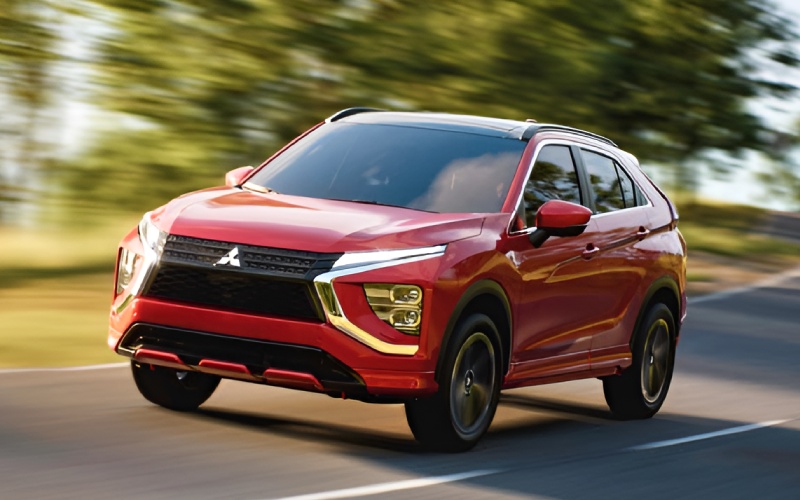
Peruzzi Mitsubishi – Which AWD system suits city-to-suburb driving in Philadelphia, PA better — 2026 Mitsubishi Eclipse Cross or 2026 Hyundai KONA?
Shoppers across the Delaware Valley often ask a simple question that turns out to be surprisingly complex: Which compact SUV delivers more confident all-weather control for city-to-suburb life—2026 Mitsubishi Eclipse Cross or 2026 Hyundai KONA? Both are compelling, but they approach traction and stability differently. The Eclipse Cross makes all-wheel confidence standard with Super-All Wheel Control (S-AWC) on every trim. KONA, by contrast, offers HTRAC AWD on select configurations; it’s very capable, but it’s a choice you have to make and may not find on every vehicle you test-drive on a given day. If you commute between neighborhoods, shopping centers, and office parks, and occasionally head into Center City or out toward the Princeton-Trenton corridor, having the same traction story across all trims can be the deciding factor.
What S-AWC does differently
On Eclipse Cross, S-AWC coordinates traction and stability systems to send power where grip exists and brake where rotation needs to be checked. It’s not just all-wheel drive in a traditional sense; it’s a layer of predictive control that makes quick course corrections feel natural. That means steady pullaways on damp paint stripes, confidence through mildly rutted side streets, and better balance when a lane change coincides with a mid-corner bump. KONA’s HTRAC AWD is a strong performer—especially with the available 1.6L turbo and 8-speed automatic—but its availability varies by trim, and its tuning focuses more on traction response than on the integrated feel S-AWC is known for.
Real life isn’t a closed-course test. It’s alleyway snow ridges after a plow pass, slick leaves, fresh rain on old asphalt, and sudden stops when a ball bounces into the road. That’s where Eclipse Cross’s calm, predictable behavior stands out. The chassis is comfort-tuned to keep chatter out of the cabin, and the drivetrain’s smooth power delivery helps S-AWC do its job without drama. You sense the stability, but you don’t have to manage it—it just happens in the background.
Daily drivability, parking, and visibility
City-to-suburb living means navigating tight parking angles, parking garages with odd pillars, and parallel spots that tempt curb rash. Eclipse Cross answers with an available Multi-View Camera System, giving you a 360-degree view that makes precise maneuvers less stressful. KONA’s Surround View Monitor, available on Limited, offers a similar advantage and pairs nicely with features like Blind-Spot View Monitor. Both SUVs provide strong visibility and lighting; Eclipse Cross emphasizes clear sightlines and available LED headlamps, while KONA’s sleek front lighting and modern instrument display reinforce its tech-forward vibe.
Comfort and technology that genuinely help
Eclipse Cross complements its traction advantage with available features that matter after a long day: leather-appointed seating surfaces, heated steering wheel, and an 8-way power passenger seat on upper trims. Mitsubishi Connect with Safeguard and Remote Services (enrollment required) adds remote access convenience, while intuitive infotainment keeps the learning curve short. KONA ups the ante with a 12.3-inch display and wireless smartphone integration on every trim. Both keep you connected and protected, but the Eclipse Cross doubles down on everyday ease—less fiddling, more driving—especially when you just want to get home from a late game or evening shift.
- Year-round traction expectation: Eclipse Cross makes S-AWC standard, so every test drive matches what you’ll own; KONA’s HTRAC AWD is available by trim.
- Low-speed confidence add-ons: Both offer a 360-degree camera system on upper trims; Eclipse Cross pairs that with S-AWC for planted maneuvering.
- Comfort that pays off: Eclipse Cross adds available leather-appointed seating and an 8-way power passenger seat to reduce fatigue on longer loops.
Ultimately, both vehicles are smart picks. If your top priority is a consistent traction story—one that shows up on base to top trims and feels the same every time—Eclipse Cross has the edge. If you value a larger central screen and features like Remote Smart Parking Assist on KONA Limited, Hyundai makes a strong case. The best answer comes from a back-to-back drive over your actual routes, from neighborhood streets to your normal freeway merge.
How to test them fairly
Plan a loop that includes damp side streets, a quick stop-and-go run, and at least one tight parking maneuver. Try gentle throttle applications from rest and a few mid-corner adjustments to sample each SUV’s composure. Listen for cabin hush over expansion joints and gauge how naturally the driver-assistance features intervene. Then park in a spot that usually makes you work—use the camera systems on both vehicles and see which one gives you the view you prefer.
As you compare, note that the Eclipse Cross’s S-AWC operates on every trim the same way—no guessing if the vehicle you’re testing is different from the one you plan to buy. KONA’s HTRAC AWD is strong but requires choosing the right configuration; if the exact trim you test lacks it, your impressions may not translate to an AWD model. That consistency is why many local shoppers give the Eclipse Cross an advantage in everyday confidence.
Frequently Asked Questions:
Does S-AWC make a difference in everyday city driving?
Yes. Even in dry conditions, S-AWC’s subtle torque distribution and stability control coordination help the Eclipse Cross feel planted during quick merges, lane changes, and tight turns—situations you meet daily in and around Philadelphia, PA.
Is KONA’s available HTRAC AWD good enough for my needs?
For many drivers, yes—HTRAC AWD is capable and confidence-inspiring. The key is ensuring the KONA you select is equipped with it; the Eclipse Cross removes that uncertainty by making S-AWC standard across every trim.
Which is easier to live with for tight parking?
Both offer a 360-degree camera on upper trims. Eclipse Cross’s Multi-View Camera System and clear sightlines make small, angled spaces feel approachable, while KONA’s Surround View Monitor and Blind-Spot View Monitor are excellent in crowded lots.
For a test drive that mirrors your commute and errands, schedule a visit with Peruzzi Mitsubishi—serving Philadelphia, Trenton, and Cherry Hill—and plan a route that reflects your real life. A few miles behind each wheel will reveal which compact SUV better suits your day-to-day rhythm.
Request more 2026 Mitsubishi Eclipse Cross information
Connect with us


